Everything about the KORG PME-40X (Professional Modular Effects)

Discuss all non-Boss pedals here!
User avatar
Pepe
Posts: 2441
Joined: Thu Aug 16, 2018 2:19 pm
Location: Germany
SBZ: Multi Platinum
Bossarea: Double Platinum
Contact:

NEXT EPS-1000 Effects Programing System

Post by Pepe » Thu Jul 30, 2026 7:57 am

1982
NEXT EPS-1000 Effects Programing System

In late 1982, the Japanese pedal manufacturer NEXT – a sub-division of Morris, known for high-quality acoustic guitars – presented a pedalboard system that operated very similarly to the BOSS SCC-700.

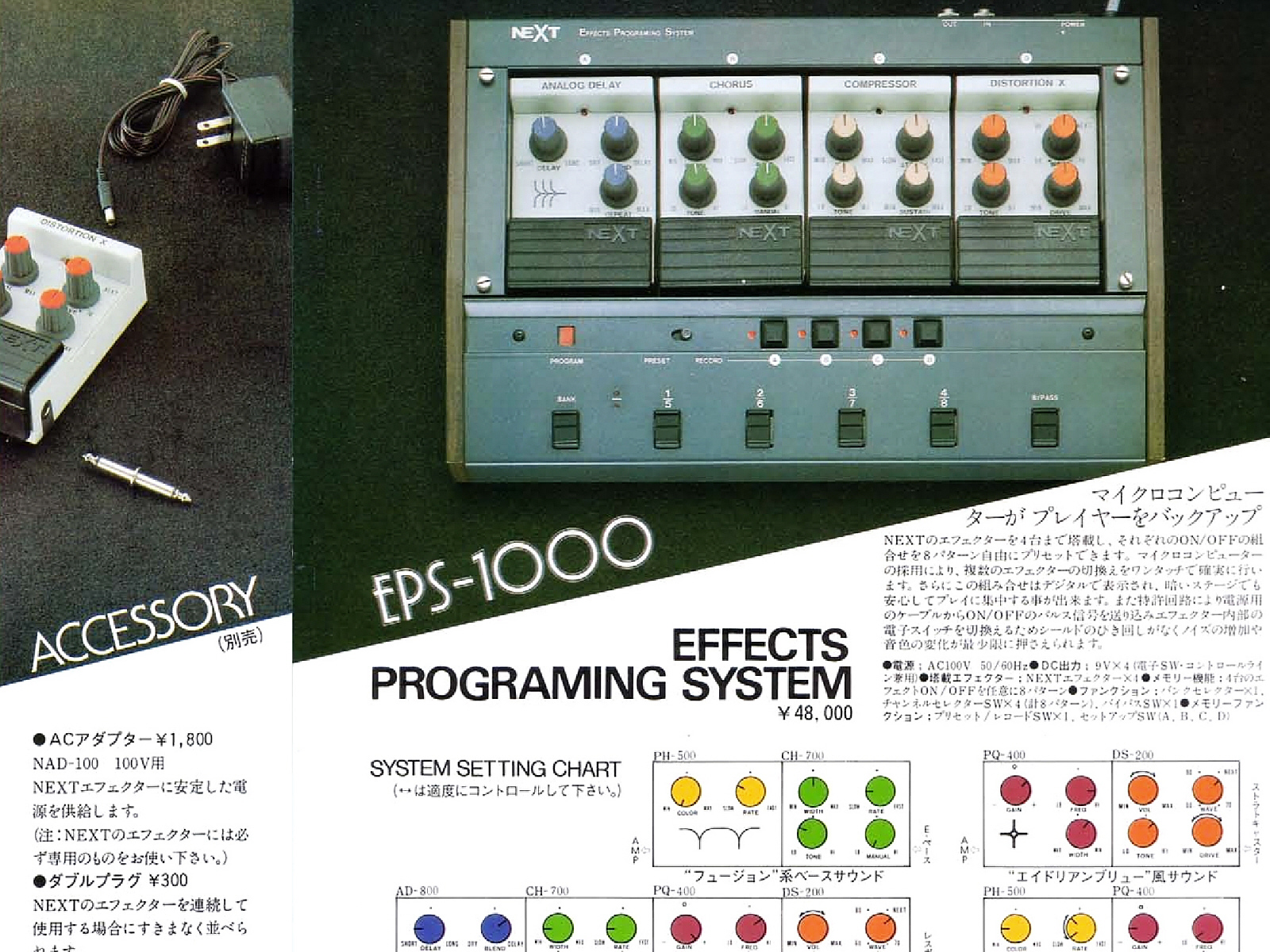
The NEXT EPS-1000 "Effects Programing System" [sic] featured a dedicated mounting area for up to four NEXT compact pedals whose bypass status was managed by a microcomputer controller. It offered eight memory patches to store the on/off combinations of the four effect units. The single pedals were linked using special adaptor plugs. However, unlike the BOSS SCC-700, the EPS-1000 did not allow for flexible signal routing; the effect order was permanently fixed. Changing this sequence was a tedious task, as it required the user to physically dismount and rearrange all four pedals. Interestingly, the NEXT EPS-1000 utilized a patented switching circuit that triggered the pedals by sending pulse signals through the four DC power cables. This clever engineering eliminated the need for complex connectors.
Image
The Japanese brochure explains the electronic switching; picture of the special plug in the "Accessory" column.

Despite this innovation, the practical advantages of using the board over standalone pedals were limited. In a setup with only four effects in a fixed serial order, a computerized controller is arguably more of a luxury than a necessity. With its high retail price, the empty board cost more than most combinations of four actual effect pedals from the same series.

Contemporary reviews reported that the digital switching mechanism caused sporadic glitches. Even worse: the testers regarded most of the effects as harsh and overbearing, making subtle sounds nearly impossible³. Altogether, these flaws severely hindered the system's chances of impacting the effects market.

Today, very little information can be found about the EPS-1000 and pictures are very rare. While the NEXT compact pedals continued to sell for several more years – even appearing as rebranded Fender units – the EPS-1000 system seems to have been discontinued shortly after it was released.


³As reported in articles in the magazines "One Two Testing" from January 1983 and "Electronic Soundmaker" from November 1983.
Pepe at YouTube and Instagram

User avatar
Pepe
Posts: 2441
Joined: Thu Aug 16, 2018 2:19 pm
Location: Germany
SBZ: Multi Platinum
Bossarea: Double Platinum
Contact:

Aria Dual Stage series

Post by Pepe » Fri Jul 31, 2026 11:15 am

1983
honourable mention #2:

ARIA DUAL STAGE SERIES


In early 1983, Aria introduced its first major line-up of compact effect pedals, the Dual Stage series. While the corporation had already produced the RE pedal series for export during the '70s – mainly for the European market – these new Dual Stage pedals featured a contemporary aesthetic with plain, box-shaped enclosures, designed to make an impact on the worldwide guitar scene.

Image
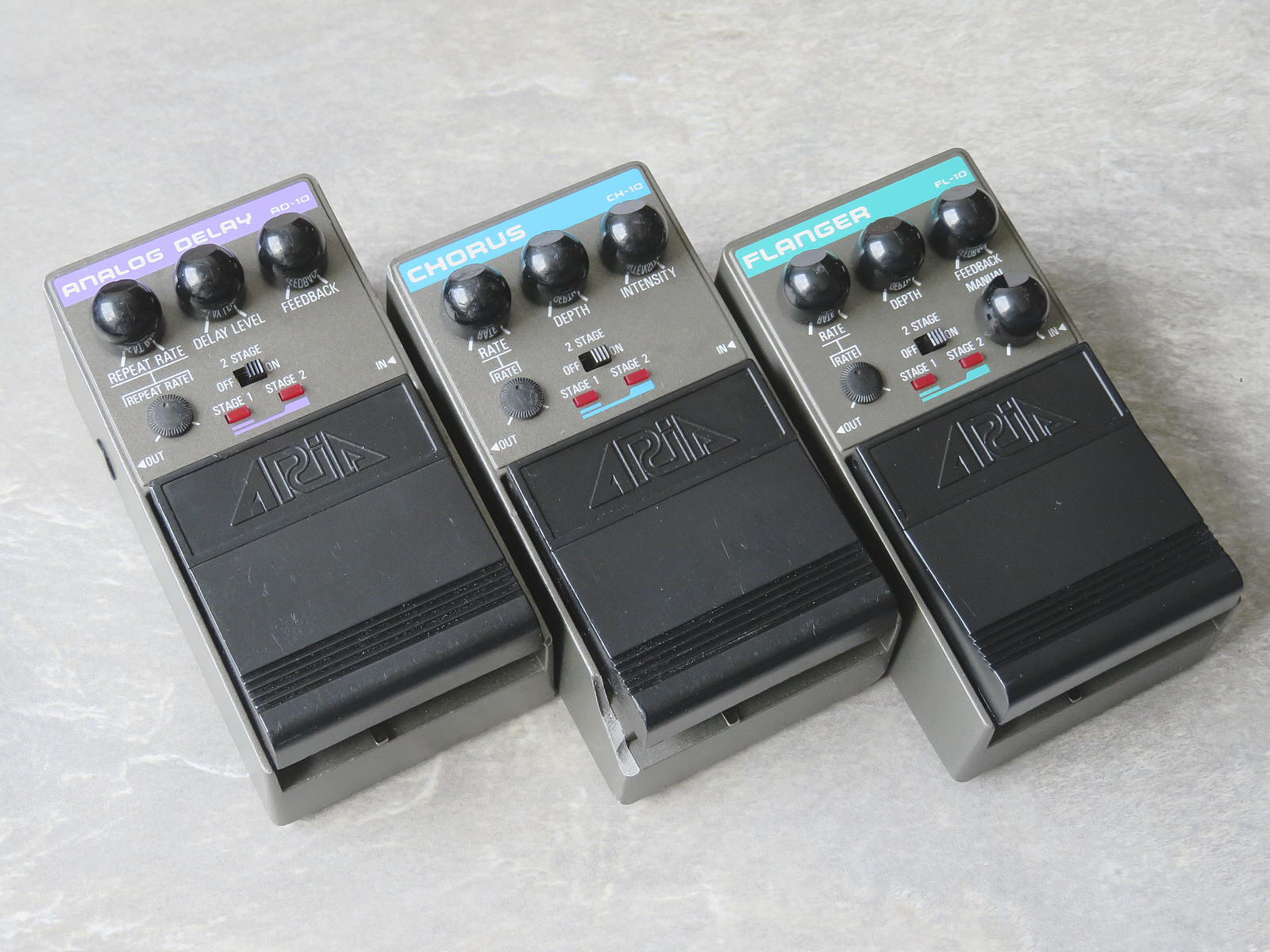
Aria Dual Stage pedals (AD-10 Analog Delay, CH-10 Chorus and FL-10 Flanger).

Some models utilized a "Two Stage" switching system, allowing for a second setting of a key parameter, such as an alternative gain value on the overdrive pedal. On paper, this sounded highly innovative. However, activating the second stage required the footswitch to be held down with significant force. Not only did this turn out to be highly impractical – leading to the feature being abandoned in later models – but the constant pressure also overstressed the die-cast zinc enclosure, making it prone to cracking under heavy use. The extent of this structural weakness is clearly visible in the photo of my CH-10 Chorus; a large section has broken off from the chassis, almost as if a predator had taken a bite out of it.

Image
The Aria CH-10 Chorus that I have owned, the broken part is clearly visible.

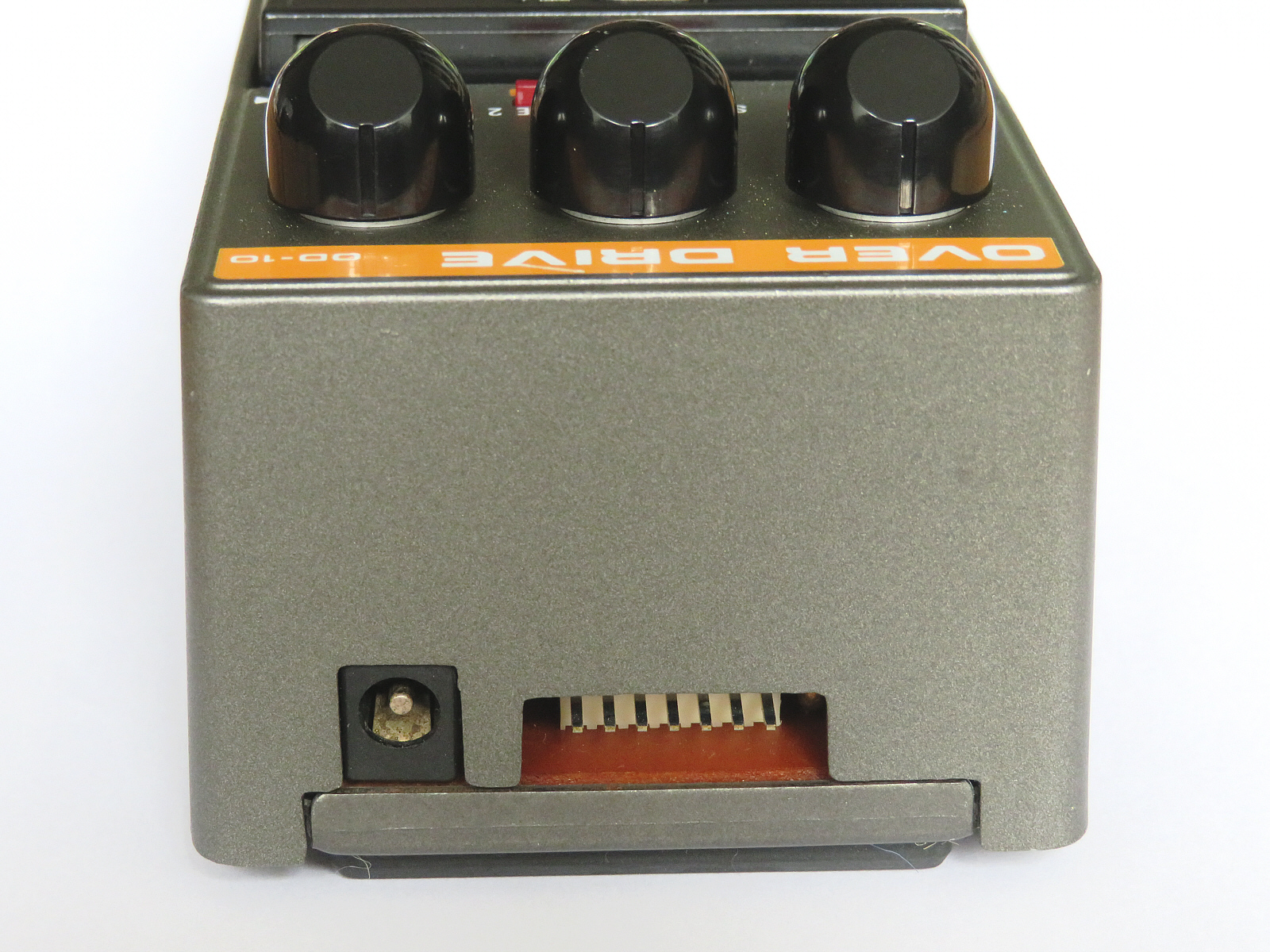
How does this pedal series fit into the chronology of early multi-effect concepts? Well, the early Dual Stage units feature a 7-pin-connector on the rear, hidden behind a rubber cover – strikingly similar to the interface on Nishijima-san's Yamaha PSE pedals that allowed the use of the System Boards. Although no evidence of a corresponding Aria pedalboard can be found in vintage catalogues or online archives, it is highly likely that the development of such a system was initially planned. Aria may have ultimately shelved the idea to avoid marketing a product that mirrored the Yamaha System Boards too closely. When I asked Nishijima-san about this connector, he confirmed he was unaware of its existence.

"I didn't know about the Aria thing, so I don't have any information."
Hiroaki Nishijima

Image
The 7-pin connector on the back of an Aria OD-10 Over Drive.

Pedal nerd information: The Dual Stage units with the integrated connector on the rear are found on all early versions featuring treadles with an engraved "ARIA" logo. Later units, specifically those with white "ARIA Dual Stage" labelling on the treadle, mostly have a plain metal surface on the back, except for the DC input jack.


:arrow: Please feel free to post any questions, contributions and corrections in the discussion thread.
Pepe at YouTube and Instagram

Locked