Everything about the KORG PME-40X (Professional Modular Effects)

Discuss all non-Boss pedals here!
User avatar
Pepe
Posts: 2441
Joined: Thu Aug 16, 2018 2:19 pm
Location: Germany
SBZ: Multi Platinum
Bossarea: Double Platinum
Contact:

Everything about the KORG PME-40X (Professional Modular Effects)

Post by Pepe » Sat Jul 25, 2026 9:44 pm

Image

INDEX soon: Yamaha PSE-40A (KORG PME-40X)


:!: Much more to follow! New parts will be published throughout the coming months.

:arrow: Please feel free to post any questions, contributions and corrections in the discussion thread.
Pepe at YouTube and Instagram

User avatar
Pepe
Posts: 2441
Joined: Thu Aug 16, 2018 2:19 pm
Location: Germany
SBZ: Multi Platinum
Bossarea: Double Platinum
Contact:

Introduction

Post by Pepe » Sat Jul 25, 2026 9:46 pm

The world of vintage effects is full of hidden gems, but few systems remain as enigmatic, widely unknown and partially misunderstood as the KORG PME-40X Professional Modular Effects. Launched in 1983, it was the last and most sophisticated analogue multi-effect system of its kind before the dawn of the digital era. It was a compact studio-quality machine with a clever concept and at an affordable price. A perfect tool not only for guitarists, but also for keyboard and synthesizer players, thanks to its superior design. But despite its unique and wonderful sounding effect modules it vanished from the spotlight far too quickly.

As a long-time collector, user and admirer of this pedal system I believe it is high time to give the KORG PME-40X the attention and reputation it deserves.

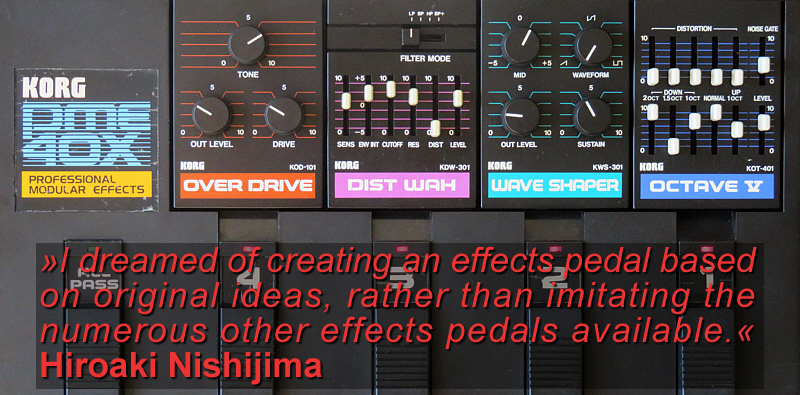
Many people know me as a die-hard KORG enthusiast and an avid collector of vintage KORG synthesizers and effects. The KORG PME-40X pedalboard, that was supported with 15 different effect modules, combines the best of both worlds. The series was developed in 1983 by Hiroaki Nishijima, the mastermind behind synthesizers like the iconic KORG MS-20, Σ (Sigma), Z3 Guitar Synthesizer and many other inventive creations.

Nishijima-san benefited from having learned a lot from his tutor, legendary Fumio Mieda, the inventor not only of the earliest KORG synthesizers¹, but also of the groundbreaking Shin-Ei Uni-Vibe effect pedal that was prominently used by Jimi Hendrix. As he stated in an interview, Nishijima-san was surprised when he studied Mieda-san’s design sketches during his first days at KORG. The creative approach of using and combining electronic parts differed a lot from what he had learned at the university.

This unconventional approach can also be found in the PME series. Some effect modules have been developed in a superbly creative way. And some of them offer options and sounds unmatched in the analogue world to this day. Models like the KOT-401 Octave V and KWS-301 Wave Shaper are absolutely unique both in sound and function. Clever combinations of PME effect modules lead to sonic adventures that you cannot find elsewhere. The PME-40X is more than just a multi-effect – it is a testament to an era of uncompromising analogue creativity.

This aims to be the ultimate and most complete KORG PME-40X report ever written.

I am deeply honoured to include exclusive information and technical insights provided by Hiroaki Nishijima himself. This collaboration was made possible through Hideki Ishikawa, director and founder of muséeKORG. Having Nishijima-san personally answer my questions and share his original design thoughts has been one of the most remarkable experiences of my life. His invaluable input ensures that this report provides the most accurate and detailed look at the PME system ever published.


¹ This led to a fundamental transformation of the KEIO corporation to one of the world’s leading manufacturers of musical instruments (Keio + Organ = KORG).
Pepe at YouTube and Instagram

User avatar
Pepe
Posts: 2441
Joined: Thu Aug 16, 2018 2:19 pm
Location: Germany
SBZ: Multi Platinum
Bossarea: Double Platinum
Contact:

The pedal-historical context

Post by Pepe » Sat Jul 25, 2026 9:47 pm

When the first mass-produced pedals conquered the guitar world, many of them came in large, bulky enclosures, such as the Electro Harmonix Big Muff Pi or the Maestro Mini-Phase, whose 'Mini' name was absurd given its massive footprint. Since the small circuit boards in these early pedals did not strictly require so much space, it is fair to say that these oversized boxes served more as status symbols. The Colorsound pedals with their '60s action-comic-style graphics exuded a strong attitude. Yet these early effects remained very expensive and very few non-professional guitarists owned more than a pair of them.

By the mid-'70s manufacturers like MXR began establishing pedals in a significantly more compact form and with a much lower price tag. This shift paved the way for the iconic BOSS compact pedals, which are still manufactured to this day with few significant changes.

At the same time a few groundbreaking effects saw the light of day, such as overdrive and distortion circuits that offered completely different sounds than the saturated roar of early fuzz pedals. The triumph of microelectronics in the mid-'70s marked, on the one hand, a breakthrough for computers for the average user and, on the other, for high-quality effects for the everyday musician. This had a profound impact on the music scene of the early '80s, because impressive effects like flanger, chorus and delay – previously only possible in a studio with incredibly expensive and often delicate machines – now came in a small pedal format that was much more affordable and reliable due to micro-sized bucket brigade delay (BBD) chips.

Guitarists all over the world began exploring all these new sounds and incorporating them in their music styles. Suddenly an ambitious musician needed more than just a fuzz pedal to impress the audience.

This birthed a new dilemma, one that modern players exploring the possibilities of single effects know all too well. Multiple individual pedals, however compact they may be, require their own batteries or power supplies and must be linked with quality patch cables. Nowadays you can easily buy pedalboards of different sizes, many featuring high-performance power supplies for almost any voltage. But the landscape of the late '70s and the beginning of the '80s was a different story!

Any owner of three or even more pedals has surely cursed a dead battery more than once, having forgotten to unplug an input jack. Relying on mains power often meant buying a separate adapter for every single pedal, transforming every stage into a tangled tripping hazard. That called for a new solution, and thus, the multi-effect was born.
Pepe at YouTube and Instagram

User avatar
Pepe
Posts: 2441
Joined: Thu Aug 16, 2018 2:19 pm
Location: Germany
SBZ: Multi Platinum
Bossarea: Double Platinum
Contact:

Early multi-effect concepts

Post by Pepe » Sun Jul 26, 2026 12:33 pm

By the late 1970s several corporations worldwide already offered various pedals and effect types in their product line-ups, yet none had introduced a true multi-effect system. The first models of this kind appeared at the beginning of 1980, most of them being entirely analogue.

Digital systems with dozens of effect algorithms, driven by compact digital signal processors (DSP) as we know them today, were still technically impossible. The microprocessors of the time (Z80 or 6502) lacked the processing power and memory chips still cost a fortune. While digital effect devices had existed since Lexicon introduced the first commercial digital delay unit in 1971 (the Delta T 101, offering a mere 100ms delay time), these massive, horribly expensive machines were custom hardware-heavy solutions that required vast amounts of space and tons of parts.

Consequently, there was a window of roughly five years before the era of affordable digital multi-effects began with the Yamaha SPX90 in 1985, followed by the Roland DEP-5 in 1986 and all the other rack units that would go on to define the sound of the late '80s. Exploring the multi-effect approaches of this period unearths some fascinating concepts.

Interestingly, though not surprising, most of these new concepts were developed in Japan². Just as Japanese engineering, with its constant pursuit of order and efficiency in the smallest possible footprint, had a global influence on the look and feel of audio devices of this era – resulting in compact and elegant hi-fi stacks and iconic portable cassette players – it also defined the future of multi-effect design.

Let me guide you through the history of Japanese analogue multi-effect concepts that eventually peaked with the introduction of the KORG PME-40X.


² In the '70s a few companies in the United Kingdom developed some interesting concepts of powering and combining several effects at once. The Bell Electrolabs "Modular Series" and the Eurotec "Blackbox" units are early and fascinating approaches to arranging pedals in a somewhat compact way, though they often proved unreliable for stage use.
Pepe at YouTube and Instagram

User avatar
Pepe
Posts: 2441
Joined: Thu Aug 16, 2018 2:19 pm
Location: Germany
SBZ: Multi Platinum
Bossarea: Double Platinum
Contact:

Maxon UE-700

Post by Pepe » Sun Jul 26, 2026 6:48 pm

1978/79
MAXON UE-700

To be precise, the very first true multi-effect system was the Maxon UE-700 in 1978/79. It was an incredibly expensive rack unit, entirely handcrafted in limited numbers using meticulously selected components.

The beautiful looking UE-700 with its dedicated foot controller featured five effects that were based on the circuits of the first and second Maxon pedal series: Phaser, Compressor, Distortion, Flanger and a Ten-Band Equalizer.³ While famous users included Peter Gabriel, Steve Miller and Bob Weir (co-founder of the Grateful Dead), the UE-700 remained out of reach for the average musician. To this day it fetches very high prices whenever a unit appears on the vintage market.


³ Apparently the models upon which these effects were based are the PT-707 Phase Tone II, the "Compressor" (first series), the OD-801 D&S, the FL-305 Flanger and the GE-100 Graphic Equalizer.
Pepe at YouTube and Instagram

User avatar
Pepe
Posts: 2441
Joined: Thu Aug 16, 2018 2:19 pm
Location: Germany
SBZ: Multi Platinum
Bossarea: Double Platinum
Contact:

MAXON UE400 Multi-Effects (Ibanez UE 400)

Post by Pepe » Sun Jul 26, 2026 7:00 pm

1980
Maxon UE400 Multi-Effects (Ibanez UE 400)

Only one year later, in 1980, Maxon introduced the UE400 (also marketed as the Ibanez UE 400), which is widely regarded as the first mass-produced analogue multi-effect system. Following the rack-mount format of the UE-700, this significantly more cost-effective successor housed four complete effect circuits: Compressor, Phaser, Distortion, Chorus/Flanger, alongside a separate effects loop channel.

In late 1980, Maxon added the UE401, which was almost identical except for the inclusion of an overdrive – the legendary Maxon OD-808/Ibanez TS-808 circuit – in place of the distortion, while also featuring a stereo output for the chorus. Curiously, the Ibanez model was then updated to these UE401 specifications but retained the UE400 name, which can be quite confusing. However, they are easily distinguished by the number of audio jacks on the left of the front panel.

In 1981, the Maxon UE405 (in this case also released as the Ibanez UE405) completed the rack unit line-up. It offered a different effects array suitable for various instruments, featuring Compressor/Limiter, Stereo Chorus, Parametric Equalizer and Analog Delay.

The Maxon/Ibanez UE rack units became standard equipment for guitar and keyboards in many studios while the special foot controllers transformed them into professional tools for stage use. An innovative five-way "Insta-Patch" switching system allowed for changing the order of the four high-quality effects and the effects loop literally with a flick of the wrist.

Despite these advancements, for most musicians, the system was not a very portable solution and still quite an investment.
Pepe at YouTube and Instagram

User avatar
Pepe
Posts: 2441
Joined: Thu Aug 16, 2018 2:19 pm
Location: Germany
SBZ: Multi Platinum
Bossarea: Double Platinum
Contact:

Yamaha PSE Professional System Effectors

Post by Pepe » Mon Jul 27, 2026 11:23 am

1980
YAMAHA PSE Professional System Effectors

At the end of 1980, Yamaha released the PSE pedal series, designed by Hiroaki Nishijima. While 14 of the 16 pedals could be used individually on battery power and with standard input and output jacks, they also featured a special 6-pin connector on the rear. This allowed them to be integrated into one of the dedicated Yamaha System Boards (SB-40, SB-100 or SB-200).

Image
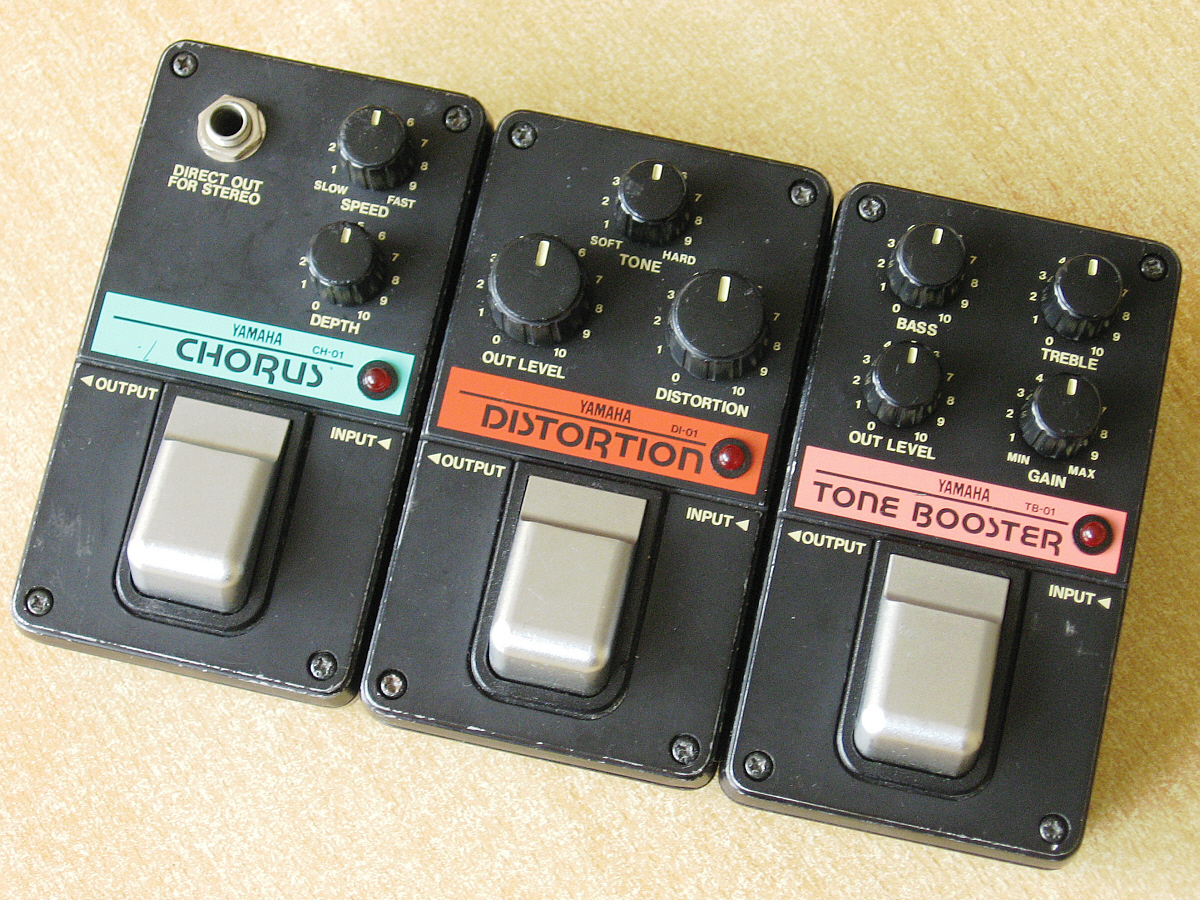
Three of the five Yamaha PSE pedals that I have owned in the past.

These mains-powered boards supplied the inserted pedals with the correct power and routed the audio signal through those special pins. The MP-01 Mini Pedal, which only worked in combination with a board, could serve as a volume pedal or a CV controller. By sending control voltages to other effects, it could remotely change certain parameters – for example, turning the PE-01 Parametric EQ into a treadle-controlled wah. The three available System Boards allowed the use of up to four, seven or eleven pedals of the PSE series. The AD-10 Analog Delay – the only other unit besides the Mini Pedal that didn't run on batteries – was double the size of a standard pedal and occupied two slots.

Image
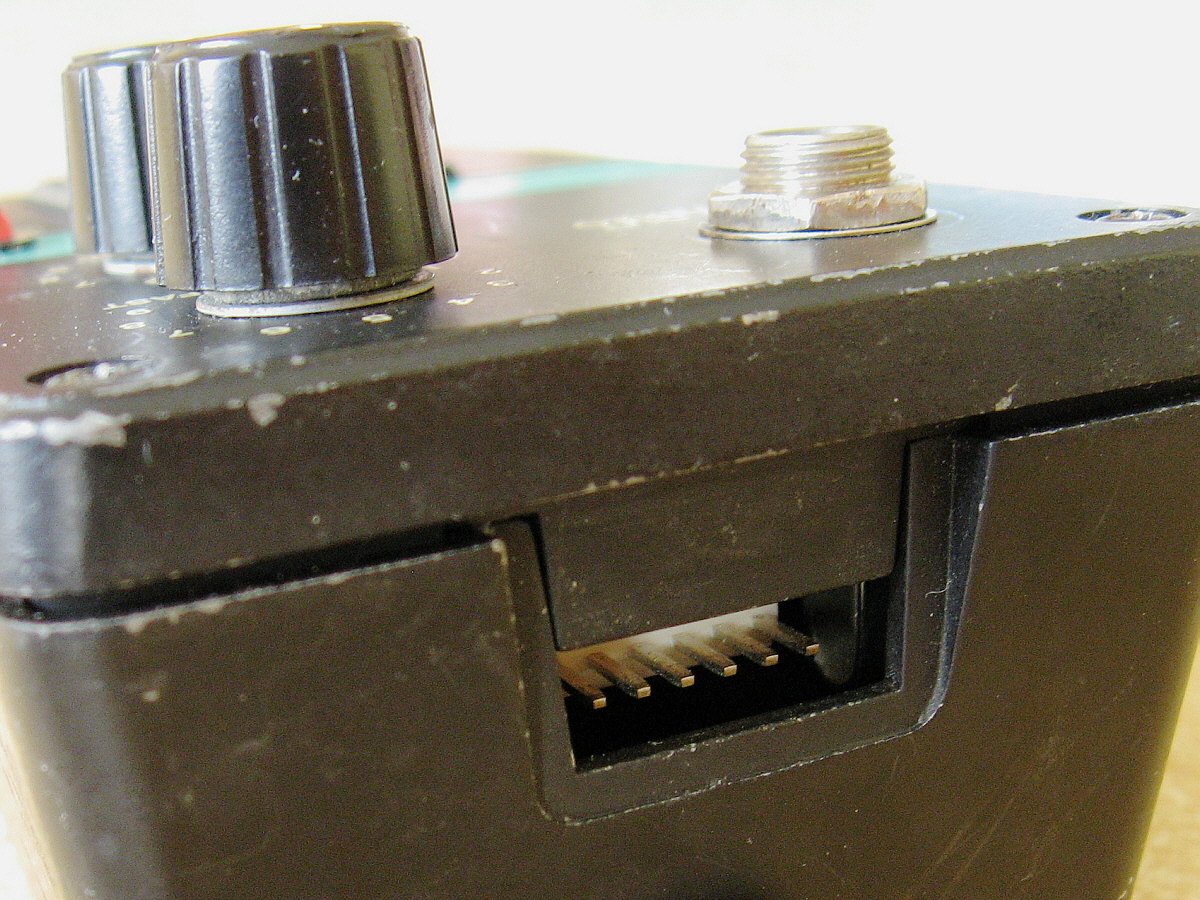
The 6-pin connector on the back of a Yamaha CH-01 Chorus.

Twelve of the Yamaha PSE models were later reissued as the KORG Effects Series in 1984, optically redesigned and without the special connectors.

The Yamaha PSE pedal system with the dedicated System Boards, all developed by Nishijima-san, was the first pure floor-based multi-effect system in pedal history. The System Boards with integrated power supply were the true forerunners of modern pedalboards, before other companies came up with similar ideas. By connecting the pedals with the special 6-pin adapter, Nishijima-san eliminated the clutter and tripping hazard of loose stompboxes. This way of tidy pedalboard arrangement is still the goal of many musicians today.

Users of the PSE system were able to customize their own multi-effect pedalboard. And no matter which pedal they chose, they were always rewarded with effects of exceptionally high quality. The flagship SB-200 even offered a patchbay, allowing players to change the signal routing without physically moving the mounted pedals, plus it had a separate All Pass switch for an immediate bypass signal. At the time, a fully equipped SB-200 was the pinnacle of pedalboard technology. In direct comparison to rack units of that era, it left little to be desired and the individual pedals were in no way inferior to their competitors' models in terms of sound.
Pepe at YouTube and Instagram

User avatar
Pepe
Posts: 2441
Joined: Thu Aug 16, 2018 2:19 pm
Location: Germany
SBZ: Multi Platinum
Bossarea: Double Platinum
Contact:

BIAS "ALL IN ONE"

Post by Pepe » Mon Jul 27, 2026 4:05 pm

1981
honourable mention #1:

BIAS "ALL IN ONE"


The Yamaha PSE line-up was showcased at the Japanese Music Fair ("Gakki Fair") in October 1981. For international music journalists, this was the first opportunity to get in touch with this innovative pedal system that was set to hit the Western market one year later.

Notably, the venue in the Tokyo Science Museum in 1981 was historic for the fact that Dave Smith, head of the American synthesizer company Sequential Circuits, presented his idea of a Universal Synthesizer Interface (USI) to the representatives of the leading Japanese instrument makers – an idea that would eventually result in the Musical Instruments Digital Interface, better known as MIDI, that became a global standard for keyboard instruments and an essential component of almost every digital multi-effect unit to follow!

Ishibashi Gakki – today one of the largest music instrument retail shops in Japan – sold rebranded effect pedals in the '80s under their own "BIAS" label. The OEM partner was the Japanese company Coron, an established effect pedal manufacturer at the time. At the same 1981 fair, BIAS showcased a multi-effect, called "All In One", a device boasting more than eight built-in analogue effects.

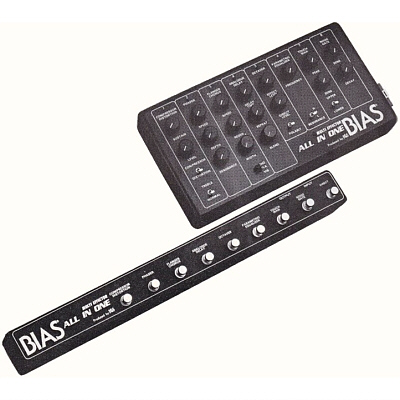
For a long time the only available source that confirmed its existence was a report in Electronics & Music Maker (issue from January 1982), featuring a rough description of the two-piece unit and the contained effects, but without any picture of it. The "All In One" remained an unknown phantom, until a scan of a BIAS product overview from 1982 was shared in May 2026. It highlights the device as a new release, advertising it as a compact solution in "book-size format" for any musician who desires a tidy setup of the most common effects.
Image

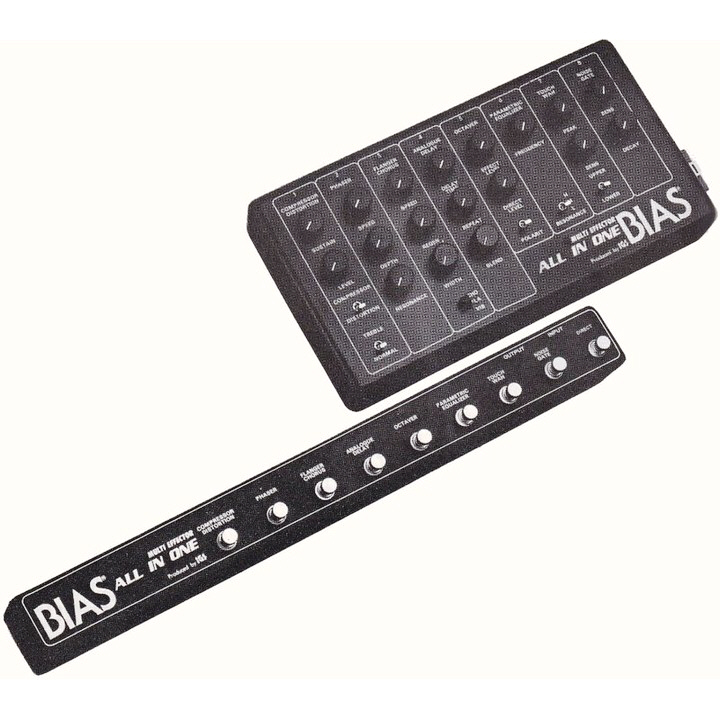
Amazingly, the BIAS "All In One", produced by IGS (Ishibashi Gakki Store) in 1981, came in a strikingly anachronistic design that precedes modern products by four decades! The main unit, containing the effect circuits and controls, had a similar look as contemporary desktop synthesizers, while the foot controller with the nine switches looked like currently available slim effect loop switchers. The two pieces were connected via a 16-pin cable.

The impressive list of included effects came in a fixed order which does not look well-thought-out. The eight footswitchable channels are, in exactly this order: Compressor/Distortion, Phaser, Flanger/Chorus (or Vibrato), Analogue Delay, Octaver, Parametric Equalizer, Touch Wah and Noise Gate. Some of the effects were placed at very unconventional points in the signal chain. Ideally an octaver needs to be at the start, a wah right before or after the distortion – and a noise gate after a delay effect is highly questionable.

Regardless of the crude signal routing, the result of miniaturizing and enhancing the analogue circuits of the Coron effect pedals and housing them in such a compact device, along with a power supply, clearly deserves appreciation. It was an ambitious attempt to challenge the Maxon UE rack units by offering over twice as much of effects. However, the production costs must have been astronomical, as the high retail price in the advertisement testifies. At ¥140,000, the "All In One" – of a lesser known store brand – cost a fortune, scaring off most of the potential buyers. It is doubtful that it went into normal production. The unit presented at the Japanese Music Fair might have been the only unit that has ever existed.
Pepe at YouTube and Instagram

User avatar
Pepe
Posts: 2441
Joined: Thu Aug 16, 2018 2:19 pm
Location: Germany
SBZ: Multi Platinum
Bossarea: Double Platinum
Contact:

Maxon UE 300 (Ibanez UE 300)

Post by Pepe » Tue Jul 28, 2026 11:45 am

1982
MAXON UE 300 (Ibanez UE 300)

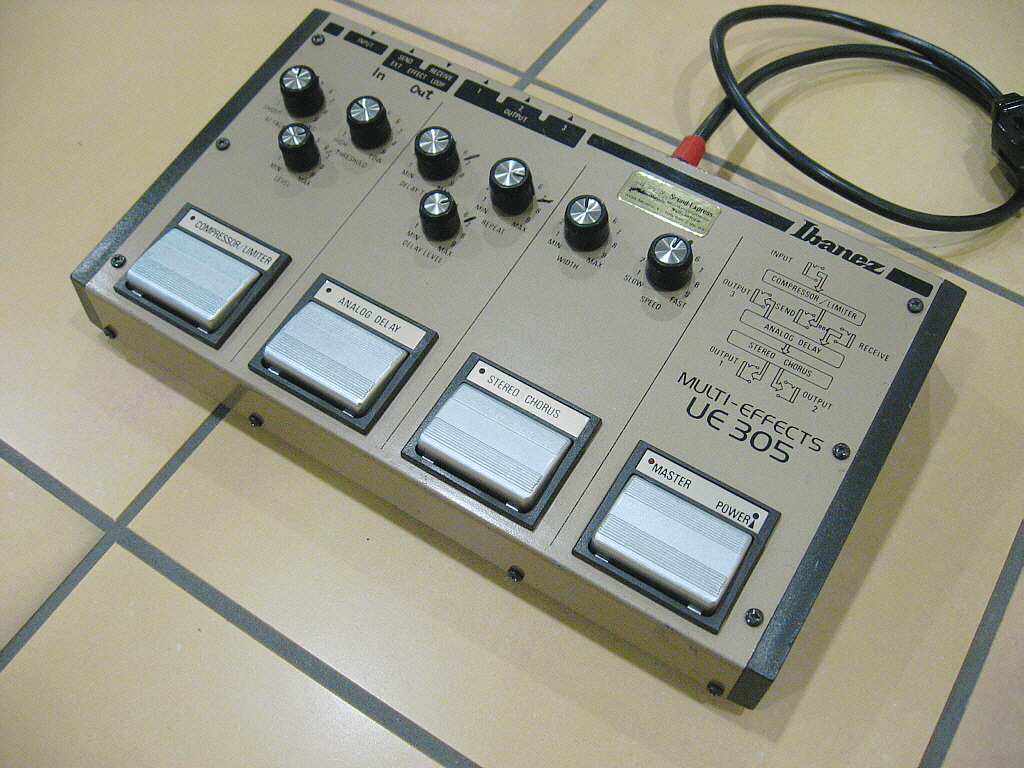
In 1982, the Maxon/Ibanez UE 300 hit the market as the very first commercial multi-effect unit in a portable pedal format, featuring three fully adjustable effects in a single enclosure. The UE 300 floor unit included an internal power supply and housed the circuits of the CP9 Compressor/Limiter, the famous TS9 Tube Screamer and the CS9 Stereo Chorus, along with an effects loop and a master bypass switch.

Image
An Ibanez UE 305 that belonged one of my bosses in the music shop.

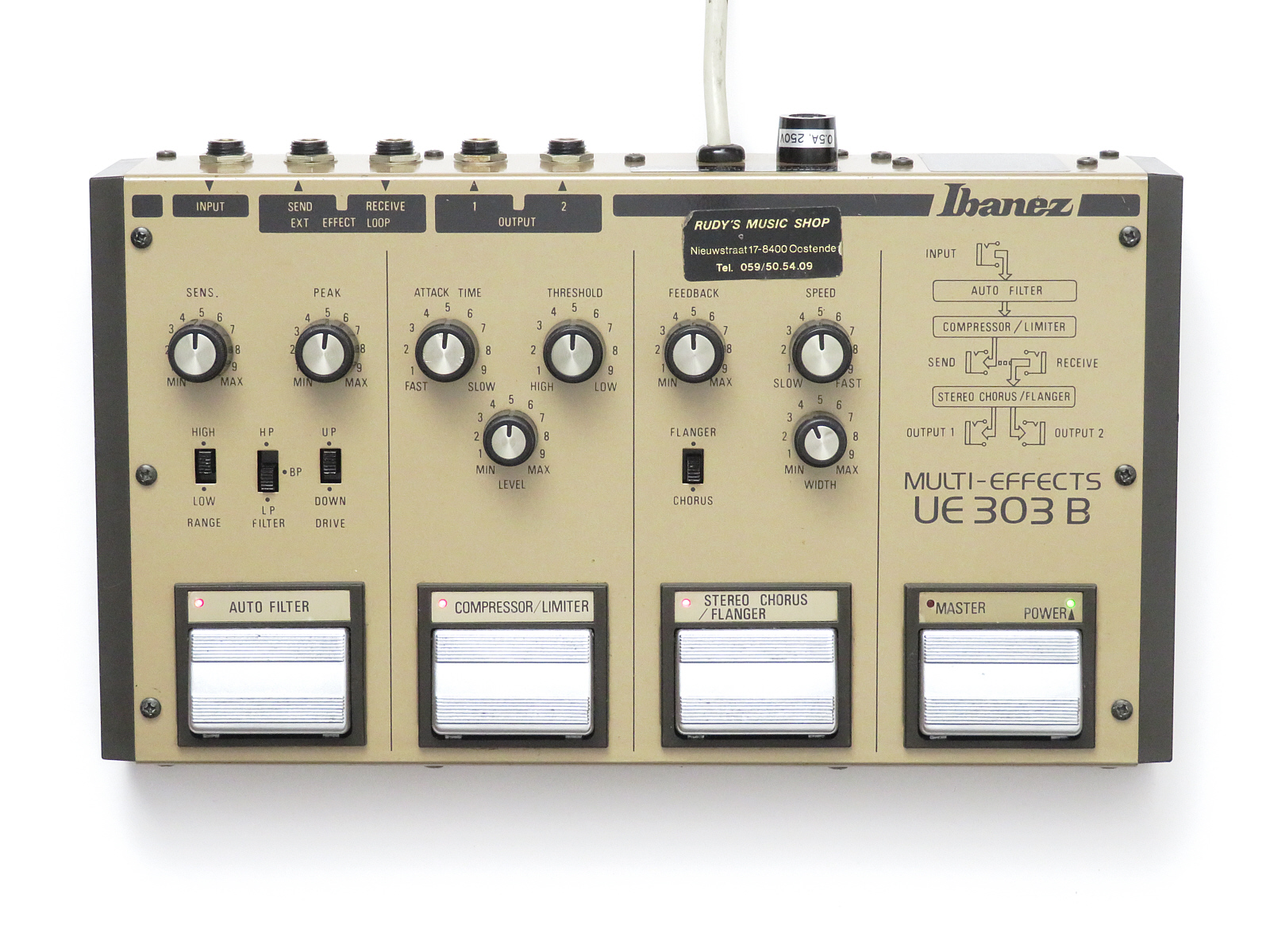
The UE 300 was a compact and excellent-sounding solution that covered a few of the most popular sounds of its era. However, it was limited to three effects and, unlike the rack units, it had a fixed signal-chain. For example, you could only use the Tube Screamer with the compressor as a pre-boost; for a boost effect after the overdrive, you had to connect a separate unit to the effects loop. Despite these limitations, the UE 300 was very successful. Follow-up units for bass guitar (UE 303 B) and various instruments (UE 305) were introduced in the following years, as well as the DUE 300, which featured digital effects.

Image
An Ibanez UE 303 B that I had briefly for recapping and maintenance.

In later years some companies offered similar non-programmable multi-effect pedals with three to five effects as a budget-friendly alternative to single pedals. Examples include the Aria APE series and the much simpler AME-1 – that was distributed under several labels well into the early 2000s – and the almost identical looking Ibanez PT3 Power Trio.
Pepe at YouTube and Instagram

User avatar
Pepe
Posts: 2441
Joined: Thu Aug 16, 2018 2:19 pm
Location: Germany
SBZ: Multi Platinum
Bossarea: Double Platinum
Contact:

BOSS SCC-700 Sound Control Center

Post by Pepe » Tue Jul 28, 2026 7:40 pm

1982
BOSS SCC-700 Sound Control Center

While the UE 300 offered a first affordable and compact solution with included effects, targeted for the average musician, the BOSS SCC-700, released in the same year, was without doubt the exact opposite.

After having introduced the first trio of its hugely successful compact pedal series in 1977, setting a completely new industry standard, the subsidiary of the Roland corporation had established itself as the market leader within a few years. By 1982, the BOSS line-up consisted of over fifteen compact effect models, many of which became benchmarks for decades, such as the CE-2 Chorus, the BF-2 Flanger and the analogue DM-2 Delay, not to mention the DS-1 Distortion, SD-1 Super OverDrive and GE-7 Equalizer, which remain in production today.

The SCC-700 "Sound Control Center" was designed to elevate BOSS compact pedals for professional stage and studio use. The core unit, the SCC-700C, was a microcomputer-controlled device that managed seven audio inputs and outputs. The signal-chain order of these seven channels was freely selectable, and each had its own output level control. The SCC-700C featured memory for 32 programs, while the separately available SCC-700F "Foot Controller" allowed musicians to easily step through these presets during a performance.

The optional SCC-700B "Effect Board" was a big, road-ready case with space for the SCC-700C and up to seven BOSS compact pedals, including all necessary cabling. While the core unit on its own could technically be used with any effect devices in pedal or rack format, this dedicated board was specifically tailored for BOSS compact pedals. Each of the seven pedal slots provided 9V power cables and two "Fixing Plugs" that secured the pedals via side-mounted fastening screws on these proprietary audio plugs.

Without effects or cables, the whole system already weighed 20 kg. With all the pedals attached, plus the wiring and the 10-metre 24-pin adaptor cable connecting the unit to the Foot Controller, a complete SCC-700 set was heavier than some combo amplifiers.

However, the system's true Achilles' heel was not its size or weight: the internal power supply offered a maximum of only 100mA (9V DC) power for all seven pedals combined. This limit was quickly exceeded even with seven analogue pedals, making external power supplies mandatory when using digital units like the BOSS DD-2 Digital Delay that was introduced just one year later.

It is no wonder that this monstrous unit was mainly found in studios due to its high price, though some artists, like U2, used it on stage. Although the system offered advanced features, like programmable effect orders and volume control, it was only sold for a few years. Like many of the analogue multi-effect solutions of this era, the SCC-700 with its clever functions was eventually made obsolete by the rapid rise of digital technology.
Pepe at YouTube and Instagram

Locked