1981
honourable mention #1:
BIAS "ALL IN ONE"
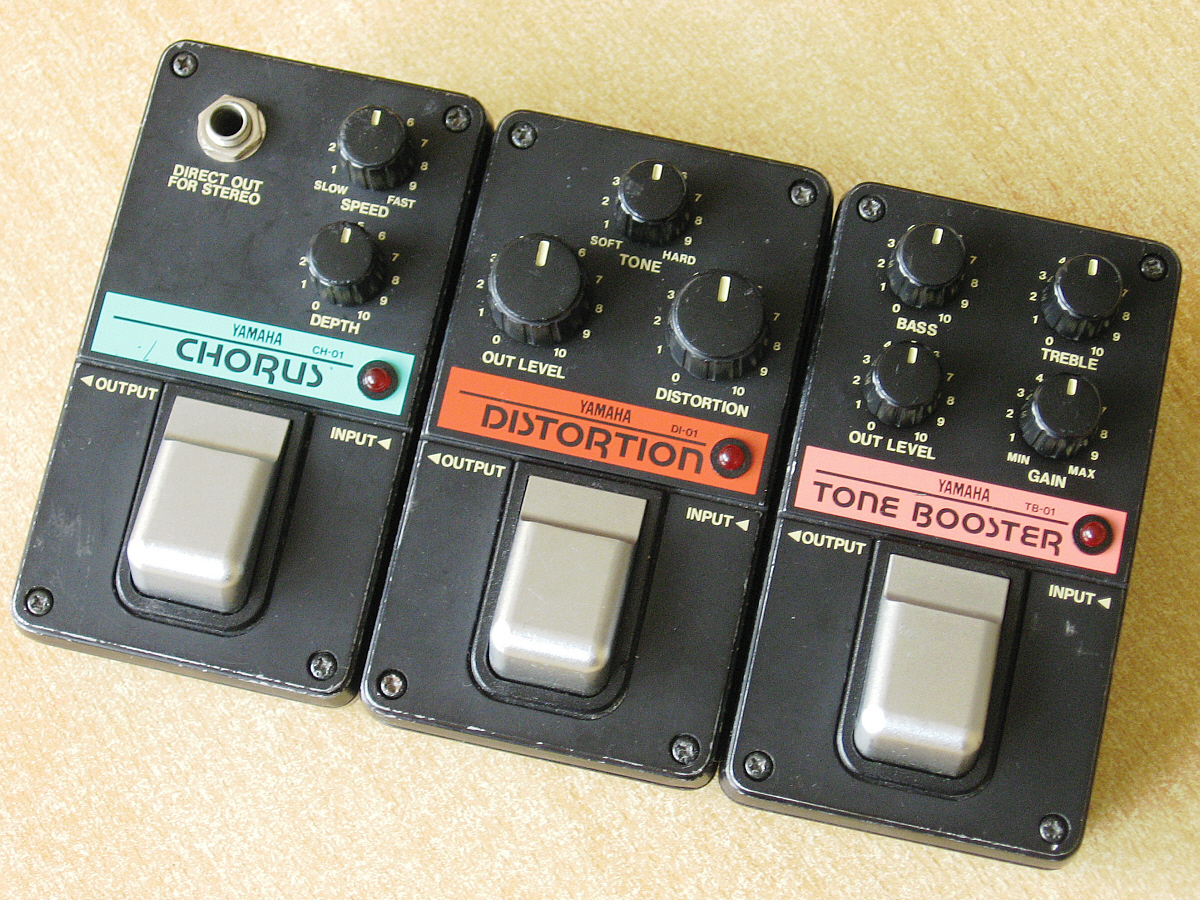
The Yamaha PSE line-up was showcased at the Japanese Music Fair ("Gakki Fair") in October 1981. For international music journalists, this was the first opportunity to get in touch with this innovative pedal system that was set to hit the Western market one year later.
Notably, the venue in the Tokyo Science Museum in 1981 was historic for the fact that Dave Smith, head of the American synthesizer company Sequential Circuits, presented
his idea of a Universal Synthesizer Interface (USI) to the representatives of the leading Japanese instrument makers – an idea that would eventually result in the
Musical Instruments Digital Interface, better known as
MIDI, that became a global standard for keyboard instruments and an essential component of almost every digital multi-effect unit to follow!
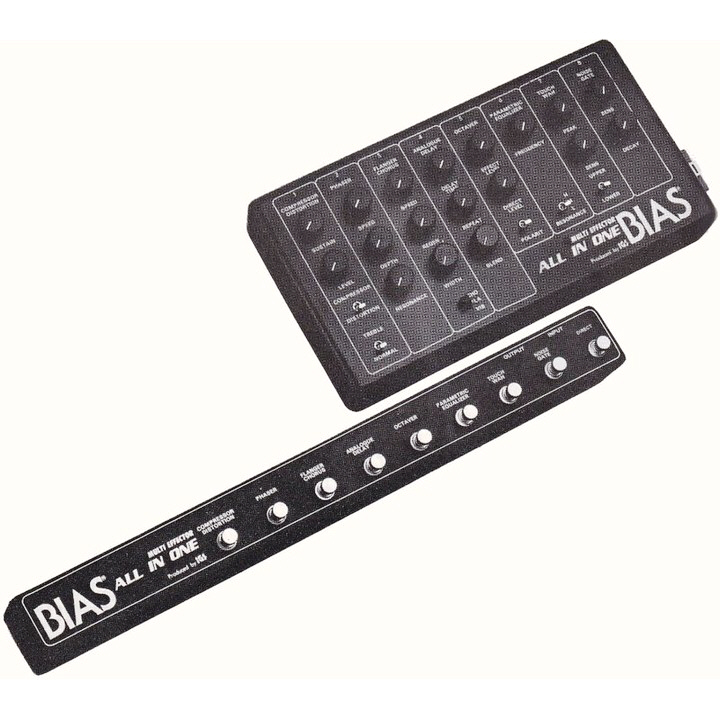
Ishibashi Gakki – today one of the largest music instrument retail shops in Japan – sold rebranded effect pedals in the '80s under their own "BIAS" label. The OEM partner was the Japanese company Coron, an established effect pedal manufacturer at the time. At the same 1981 fair, BIAS showcased a multi-effect, called "All In One", a device boasting more than eight built-in analogue effects.
For a long time the only available source that confirmed its existence was
a report in Electronics & Music Maker (issue from January 1982), featuring a rough description of the two-piece unit and the contained effects, but without any picture of it. The "All In One" remained an unknown phantom, until a scan of a
BIAS product overview from 1982 was shared in May 2026. It highlights the device as a new release, advertising it as a compact solution in "book-size format" for any musician who desires a tidy setup of the most common effects.
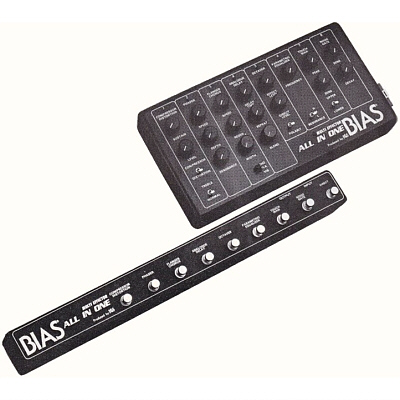
Amazingly, the BIAS "All In One",
produced by IGS (Ishibashi Gakki Store) in 1981, came in a strikingly anachronistic design that precedes modern products by four decades! The main unit, containing the effect circuits and controls, had a similar look as contemporary desktop synthesizers, while the foot controller with the nine switches looked like currently available
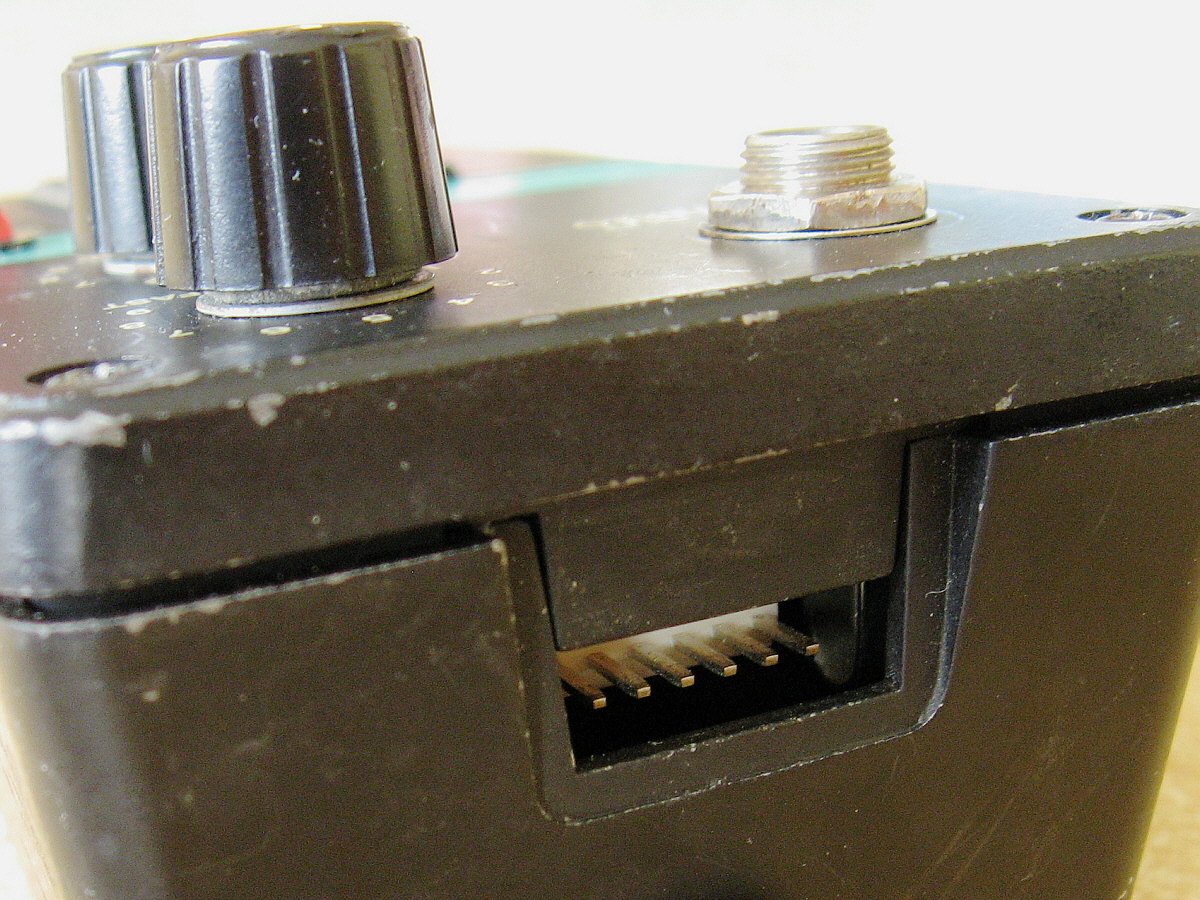
slim effect loop switchers. The two pieces were connected via a 16-pin cable.
The impressive list of included effects came in a fixed order which does not look well-thought-out. The eight footswitchable channels are, in exactly this order: Compressor/Distortion, Phaser, Flanger/Chorus (or Vibrato), Analogue Delay, Octaver, Parametric Equalizer, Touch Wah and Noise Gate. Some of the effects were placed at very unconventional points in the signal chain. Ideally an octaver needs to be at the start, a wah right before or after the distortion – and a noise gate after a delay effect is highly questionable.
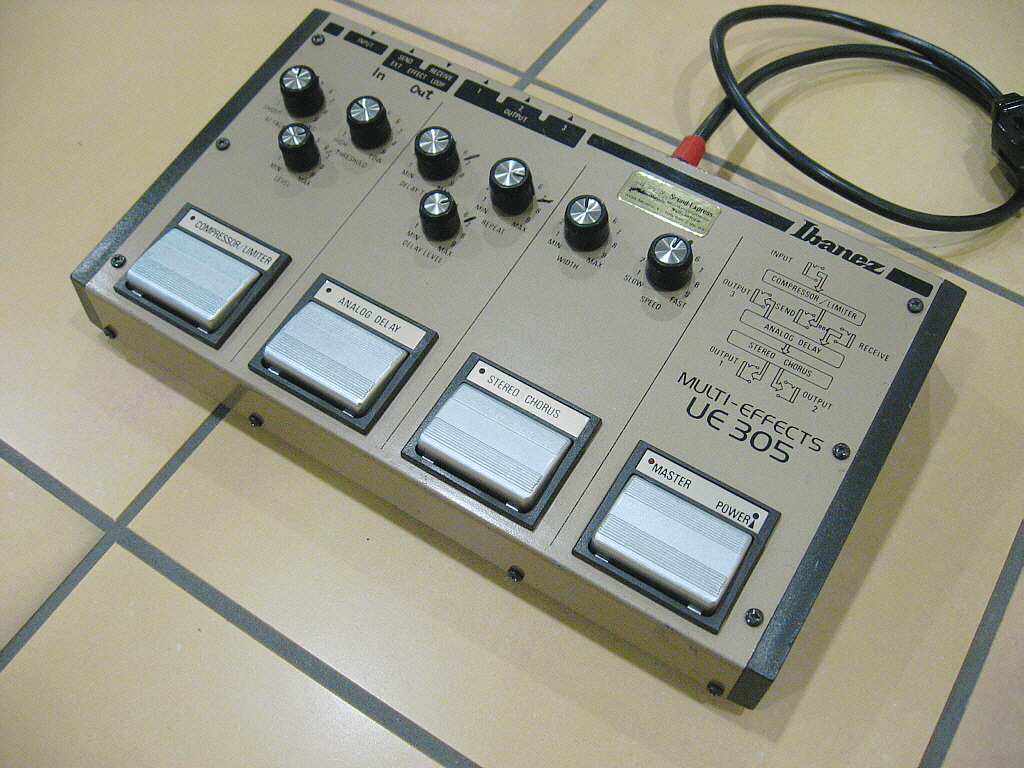
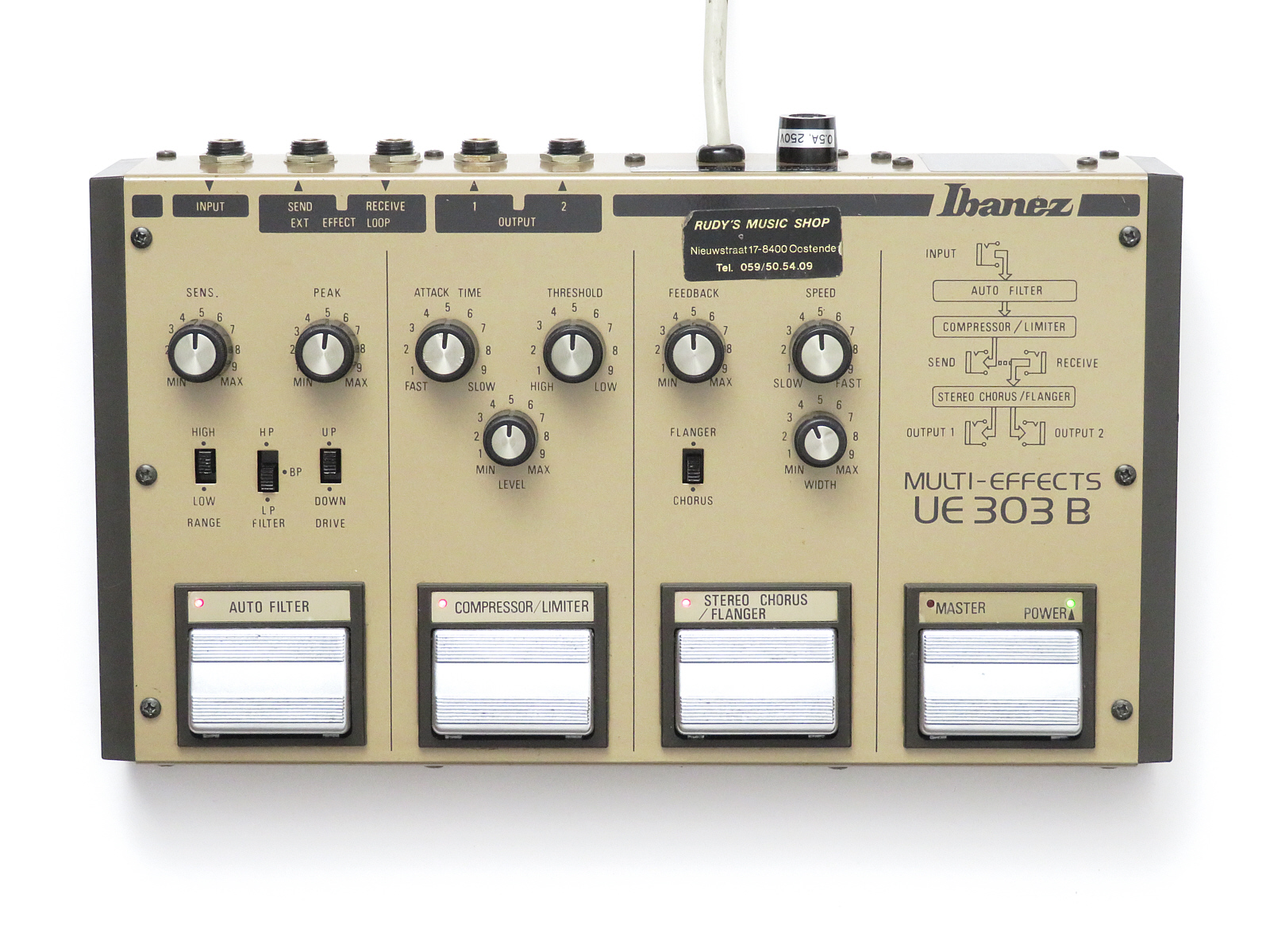
Regardless of the crude signal routing, the result of miniaturizing and enhancing the analogue circuits of the Coron effect pedals and housing them in such a compact device, along with a power supply, clearly deserves appreciation. It was an ambitious attempt to challenge the Maxon UE rack units by offering over twice as much of effects. However, the production costs must have been astronomical, as the high retail price in the advertisement testifies. At ¥140,000, the "All In One" – of a lesser known store brand – cost a fortune, scaring off most of the potential buyers. It is doubtful that it went into normal production. The unit presented at the Japanese Music Fair might have been the only unit that has ever existed.
 Much more to follow! New parts will be published throughout the coming months.
 Please feel free to post any questions, contributions and corrections in the discussion thread.